

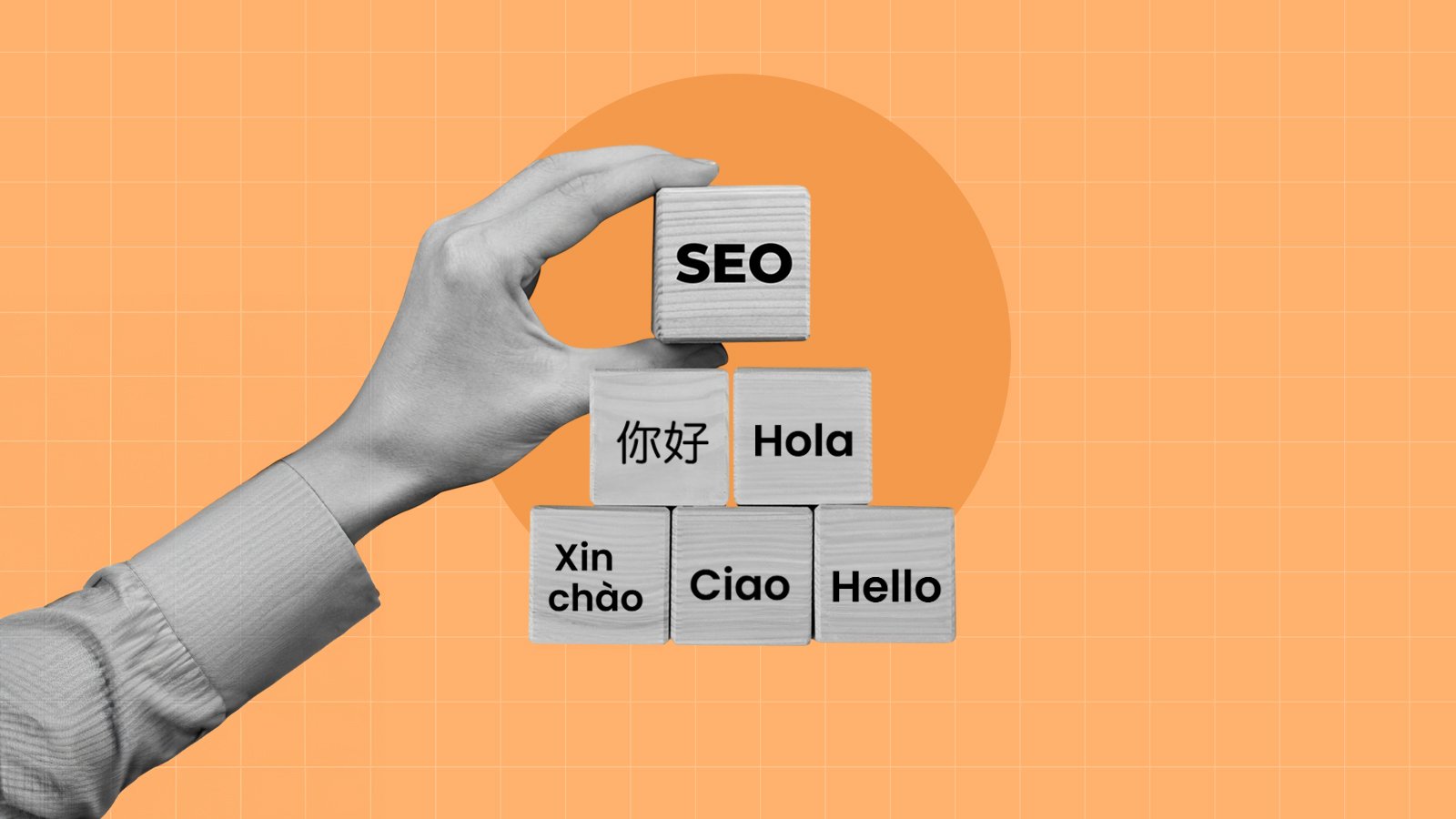
Multilingual SEO: The Ultimate Guide to French, German, Italian & Spanish Markets

Adam Gibbs
Adam Gibbs
AI-free content
📅 Updated: 31 July, 2026 / ⏱️ 6 min read
🎧 Listen Podcast

Summarize this blog post with:

Have you ever thought about how businesses overcome language barriers and succeed in international markets? This is done by using a powerful strategy called multilingual SEO.

Today, online shopping is more interconnected worldwide than it has ever been. Consumers search for stores and information about products and services in their native language, and search engines have matured to provide local results with greater fidelity.

So, what is multilingual SEO? For brands looking to grow internationally, a robust multilingual SEO strategy becomes a critical priority and not a “nice-to-have.” It strengthens your site and its content in multiple languages to reach a broader audience worldwide.

Whether you’re running a website or owning a business, this blog will help you explore multilingual SEO best practices and give you a new sense of confidence in using your best website as a global asset. Let’s get started.


Key Takeaways

  • Multilingual SEO is key to expanding your global presence. It allows your website to rank in search results for several languages, which builds a broader audience base. 
  • Keyword research must be language-specific. Focus on search habits in every target market to find the right and relevant keywords.
  • When optimizing a website’s various elements for each language, include meta tags, the content itself, URLs, and sitemaps.
  • Technical aspects matter. Choose the exemplary website architecture, ensure fast loading times, and use language switchers and redirects effectively.
  • Invest in quality translators. Avoid machine translations and work with professionals who understand cultural nuances.

Understanding Multilingual SEO

Multilingual SEO means allowing your audience who speaks different languages to understand your website’s content. For example, suppose you are a brand like Adidas. In that case, you want your website to rank when someone searches ‘sneakers’ in English, ‘tênis’ in Portuguese, or ‘zapatillas’ in Spanish. This is known as multilingual SEO.

Multilingual SEO supports search engines in indexing your content so that it has high-ranking potential in various linguistic territories. Remember, a simple translation is NOT enough! Multilingual SEO is all about localization, which involves:

  1. Mimicking the way your audience speaks and behaves.
  2. Changing phrases and metaphors to suit the region.
  3. Adding culturally significant points.
  4. Using the right currency, units of measure, dates, etc.

Multilingual SEO vs International SEO

Here’s a clear and well-structured comparison table for Multilingual SEO and International SEO:

Aspects Multilingual SEO International SEO
Primary Focus Language and content translation or adaptation. Geographic targeting, domain setup, and regional relevance.
Goal Reach audiences who speak different languages, regardless of their location. Reach audiences in different countries or regions, possibly speaking the same language.
Example Scenario A company is translating its English website into Spanish, French, and German versions. A brand targeting users in the US, UK, and Australia with separate English websites.
Content Approach Focuses on language accuracy, cultural nuances, and tone adaptation. Focuses on local preferences, currency, time zones, and regional trends.
Best For Businesses serving multilingual audiences in the same or different regions. Businesses are expanding operations to multiple countries or regions.
Tools Used Hreflang tag implementation, translation management systems. Google Search Console for geo-targeting, country-specific keyword research tools.
URL Structure Often uses language indicators in URLs (e.g., /fr/, /es/). Often uses country indicators (e.g., .uk, .ca, /us/).

Steps to Rank Your French, German, Italian & Spanish Sites

1. Pick the proper site structure (and stick with it)

Three common options:

  • ccTLDs (example.fr) — clear country signal, good for geo-targeting, higher operational cost.
  • Subdirectories (example.com/fr/) — easiest to manage, great for consolidated domain authority and analytics.
  • Subdomains (fr.example.com) — slightly weaker domain authority signals than subdirectories, but valuable for large-scale setups.

In 2025, most organizations prefer subdirectories for a balance of SEO benefit and operational simplicity. Whichever you choose, be consistent and document it.

2. Use correct hreflang & language tags

Hreflang tells search engines which language and regional variant each page serves. Use it on every page and in your sitemap if possible.

Example (for a French page in France, and a German page in Germany):

  • <link rel=”alternate” hreflang=”fr-FR” href=”https://example.com/fr/” />
  • <link rel=”alternate” hreflang=”de-DE” href=”https://example.com/de/” />
  • <link rel=”alternate” hreflang=”it-IT” href=”https://example.com/it/” />
  • <link rel=”alternate” hreflang=”es-ES” href=”https://example.com/es/” />
  • <link rel=”alternate” hreflang=”x-default” href=”https://example.com/” />

Also, add the lang attribute to <html lang=”fr”> etc. Common pitfall: mixing language and country codes incorrectly — use correct ISO codes (e.g., fr-FR, de-DE, it-IT, es-ES).

3. Localize, don’t merely translate

Translation ≠ localization.

  • Transcreation for headlines and landing pages — adapt tone, idioms, and cultural references.
  • Local formats: dates, numbers, currency, address formats, and units (e.g., metric).
  • Regulatory/company info: privacy/legal pages must reflect each country’s laws and contact details.

Avoid machine-only translations on high-value pages; combine human editors with machine post-editing if budget-constrained.

4. Do language-specific keyword research

Search intent differs by language and country. Don’t assume literal translations will have the same volume or intent.

  • Use local keyword tools or set location/language filters in your tools.
  • Check local SERPs (google.fr, google.de, etc.) for featured snippets, people-also-ask, and local packs.
  • Map intent to content type: blog vs. product page vs. FAQ.

Example: a French query may favor community-driven results while German users may prefer highly technical documentation — reflect that in structure and depth.

5. Optimize on-page signals per language

Every language version should have:

  • Localized <title> and <meta description> (don’t duplicate).
  • H1 and headings in the page language.
  • Alt text and filenames in the local language.
  • Canonical tags pointing to the correct language version (don’t canonicalize different language pages together).

Also translate structured data values (e.g., name, description) where applicable.

6. Technical performance & Core Web Vitals

Page speed and UX still matter. Optimize images, use modern formats, lazy-load responsibly, and serve content from CDNs. Mobile-first is mandatory — many European markets have high mobile usage. Monitor Core Web Vitals per locale and fix issues that impact user experience.

7. Backlinks & local authority

Backlinks remain a trust signal. Build links from reputable local domains:

  • Local industry sites, news outlets, forums, and local partners.
  • Sponsorships, interviews, and guest posts tailored to each market.
  • Local citations for businesses (Google Business Profile for local listings, local directories).

Avoid cross-linking every language version indiscriminately — prioritize relevance (e.g., German-language sites linking to your German-site SEO).

8. Local search & listings

For businesses with a physical presence, set up local profiles in each country (Google Business Profile for the specific country, local directories). Tailor descriptions, business hours, and reviews to the local audience. Encourage local-language reviews.

9. Content strategy: hub & spoke per market

Create a content hub in each language: cornerstone pages, localized blog posts, FAQs, and resources answering local pain points. Use interlinking within each language to build topical authority and help crawlers discover relevant pages.

Do not rely on a single global blog in English and translate every post—prioritize topics that matter locally and plan unique content.

10. Monitor, measure, iterate

Set up language-aware tracking:

  • Google Search Console per domain or property and filter by country.
  • Use analytics views segmented by language/country.
  • Track impressions, CTR, and conversions by locale and keyword.

A/B test localized CTAs, meta titles, and content layouts. Look at bounce rates and micro-conversions to uncover UX issues unique to each audience.

Conclusion

At first glance, multilingual SEO might seem like simple website translation — but it’s far more strategic than that. It’s about connecting with users in their own language, within their cultural context, and on the platforms they use. It blends cultural understanding, technical expertise, and user-focused strategy to unlock global growth.

Multilingual SEO focuses on:

  • Gaining deep insights into your audience’s language, region, and culture.
  • Building a scalable, well-structured website for seamless navigation.
  • Localizing content to create a natural, engaging user experience.
  • Strengthening international visibility with sustainable SEO practices.
  • Delivering clear signals to search engines for improved global rankings.

When executed effectively, multilingual SEO becomes the bridge to worldwide visibility, stronger customer trust, and sustainable international growth.

FAQs

Each structure works, but in 2025, most growing brands prefer subdirectories (like example.com/fr/ or example.com/de/) because:

  • They consolidate SEO authority under one domain.
  • They’re easier to manage and track.
  • Most CMS and SEO tools support them.

If you need a strong local presence or have local teams, ccTLDs (like example.fr) are excellent for country targeting but require more resources.

Avoid direct translation of English keywords. Instead:

  • Use local keyword tools (Google Keyword Planner, Ahrefs, Semrush with language filters).
  • Check what competitors in that language are ranking for.
  • Analyze native search intent — e.g., “acheter en ligne” (buy online) vs. “commander” (order) in French.
  • Validate keywords with native speakers or local SEO experts when possible.

Use Google Search Console to monitor impressions and clicks for each language directory or domain. In Google Analytics 4 (GA4), set up filters or properties for each locale (e.g., /fr/, /de/).

Track:

  • Language-specific traffic
  • Local keyword rankings
  • Conversion rates per language

This data helps you refine your localization strategy and identify which markets need content or technical improvement.

Some common pitfalls:

  • Using machine-only translations without localization
  • Forgetting hreflang or misusing ISO codes
  • Duplicate meta tags across languages
  • Linking all language versions together instead of local interlinks
  • Ignoring cultural differences in tone, visuals, and CTAs
  • Not measuring local performance or engagement

A multilingual SEO strategy succeeds when you balance technical precision, cultural insight, and consistent maintenance.

Written by Adam Gibbs

Adam is a skilled SEO content expert with a proven track record of crafting high-quality, keyword-rich content that drives traffic, engages readers, and ranks on search engines. With 10+ years of experience in digital marketing and content strategy, Adam specializes in creating blog posts, website copy, and marketing materials tailored to both audience needs and SEO best practices.

Related Posts

  • All Posts
  • SEO
Load More

End of Content.

Scroll

Our site uses cookies. By using this site, you agree to the Privacy Policy and Terms of Use.

0%