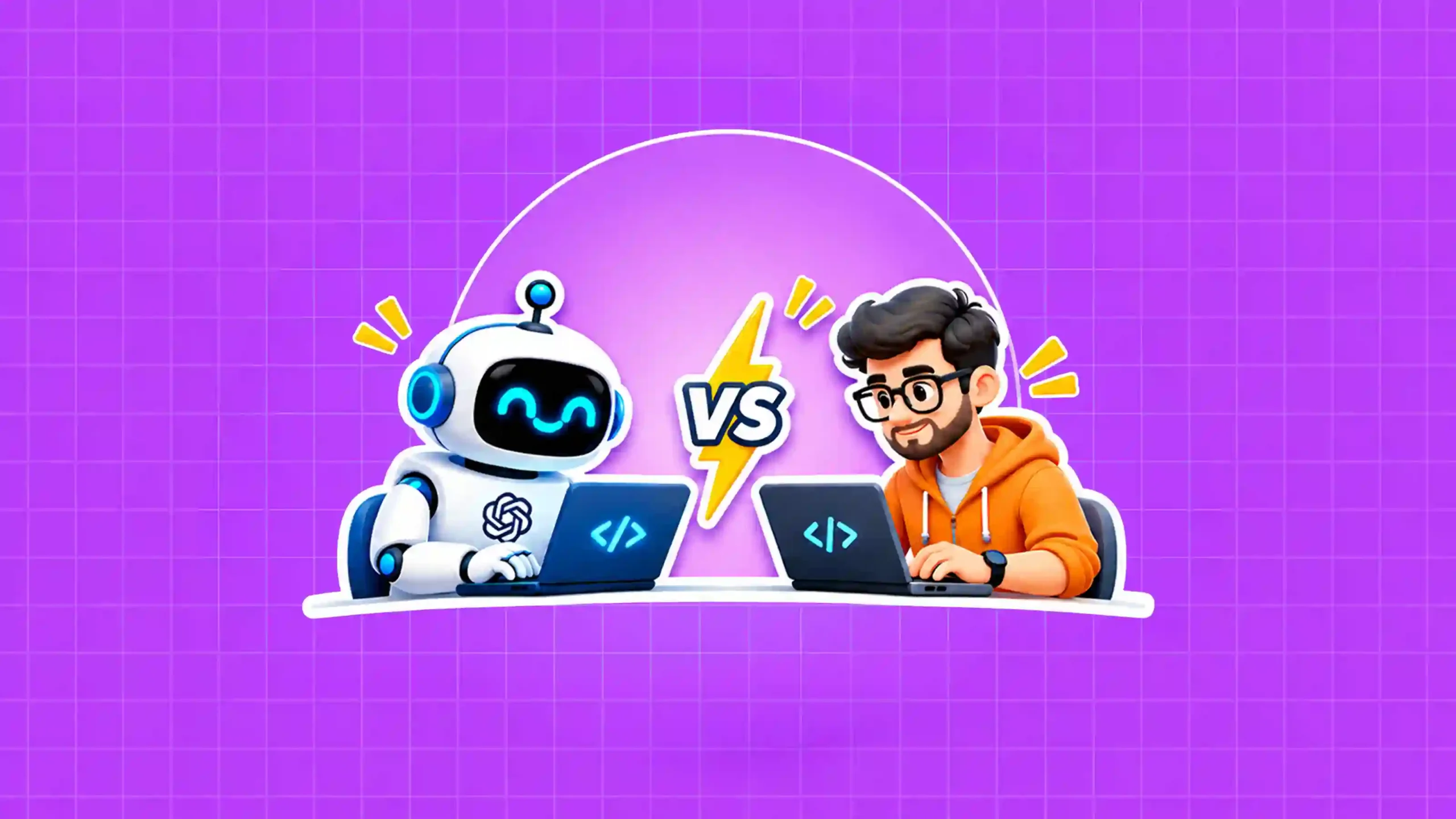
The debate around AI vs human programmers has shifted dramatically in the last few years. What once felt like science fiction is now a daily reality. AI tools can already generate code, debug applications, and even design entire systems. As we move toward 2030, the real question is no longer “Will AI replace programmers?” but rather “How will the role of programmers evolve?”
In this blog, we’ll explore what will actually change by 2030, what remains uniquely human, and how developers can stay relevant in an AI-driven world.
The Current Landscape: AI as a Coding Partner
Today, AI is already embedded in software development. Tools can autocomplete code, generate functions, and even build small applications from simple prompts. In many companies, AI is no longer optional; it’s becoming standard practice.
Recent industry trends indicate that most developers are already using AI tools regularly, and some companies are automating large portions of their coding workflows.
Despite this rapid adoption, AI remains more of an assistant than a replacement. It helps developers work faster, but it doesn’t fully understand business needs, user experience, or long-term system design.
The Big Shift: From Coding to Orchestrating
By 2030, the biggest transformation will be in what programmers actually do.
Instead of writing every line of code manually, developers will act more like AI orchestrators, guiding, reviewing, and managing AI-generated outputs.
What this means:
- AI writes most of the code
- Humans define the problem
- Humans verify and refine solutions
This shift is already underway. Developers are moving from “code writers” to “solution architects” who focus on system thinking rather than syntax.
Think of it like this:
Before: You write code line by line
By 2030: You supervise AI writing thousands of lines for you
Rise of Autonomous AI Agents
One of the most important changes by 2030 will be the rise of agentic AI, systems that can perform tasks independently.
Instead of asking AI for small snippets, developers will give high-level instructions like:
- “Build a full-stack app.”
- “Migrate this database.”
- “Optimize system performance.”
The AI will:
- Plan the task
- Execute it
- Fix errors automatically
- Ask for human input only when necessary
This shift from tools to autonomous agents will redefine productivity. Some systems are already capable of making thousands of code changes per week with minimal human intervention.
What AI Will Replace (and Already Is)
By 2030, several traditional programming tasks will likely be automated:
1. Repetitive Coding Tasks:
- Boilerplate code
- CRUD operations
- Basic APIs
2. Debugging & Testing
AI can already:
- Detect bugs
- Suggest fixes
- Generate test cases
3. Documentation & Refactoring
AI will:
- Write documentation instantly
- Optimize code structure
Reports suggest AI could replace many routine tasks across industries, including coding, writing, and summarization.
What Humans Will Still Do Better
Despite AI’s rapid growth, there are critical areas where humans will remain essential.
1. Problem Solving & System Design
AI can generate solutions, but it doesn’t truly understand the problem in context. Humans will:
- Define goals
- Make architectural decisions
- Align tech with business needs
2. Creativity & Innovation
AI recombines existing knowledge. Humans create:
- New product ideas
- Unique user experiences
- Breakthrough innovations
3. Ethical Decision-Making
AI lacks moral judgment. Humans will decide:
- What should be built
- Data privacy boundaries
- Bias and fairness
4. Communication & Collaboration
Developers will increasingly act as a bridge between:
- Business teams
- AI systems
- End users
These “soft skills” are becoming just as important as technical skills.
Will AI Replace Programmers?
Short answer: No, but it will replace certain types of programmers.
The biggest risk is for developers who:
- Only write basic code
- Don’t understand systems
- Avoid learning AI tools
According to research and industry insights:
- AI will eliminate tasks, not entire roles
- New AI-related roles will emerge
- Demand will shift toward higher-level skills
Even broader workforce studies suggest companies may reduce some roles due to AI, but they will also create new opportunities in AI-driven fields.
The New Developer Skillset for 2030
To stay relevant, programmers must evolve. Here’s what will matter most:
1. AI Collaboration Skills
- Prompting and guiding AI
- Reviewing AI-generated code
- Combining multiple AI tools
2. System Thinking
- Understanding architecture
- Designing scalable systems
- Managing complex workflows
3. Context Engineering
Instead of writing code, developers will focus on:
- Structuring data
- Providing the right inputs to AI
- Ensuring accuracy
4. Human-Centered Skills
- Communication
- UX thinking
- Critical reasoning
The Future: Collaboration, Not Competition
The future is not a battle between AI and humans; it’s a collaboration.
By 2030:
- AI will handle execution
- Humans will handle direction
This hybrid model is already being described as the future of work, where humans and AI complement each other rather than compete.
In fact, some experts predict that AI could reach human-level intelligence in certain domains by 2030, making this collaboration even more powerful and necessary.
Challenges Ahead
While the future is promising, it comes with challenges:
1. Job Displacement
Entry-level roles may shrink as AI automates basic tasks.
2. Skill Gap
Developers who don’t adapt may struggle to stay relevant.
3. Over-Reliance on AI
Blind trust in AI-generated code can lead to:
- Security risks
- System failures
4. Ethical Concerns
AI-generated systems raise questions about:
- Bias
- Privacy
- Accountability