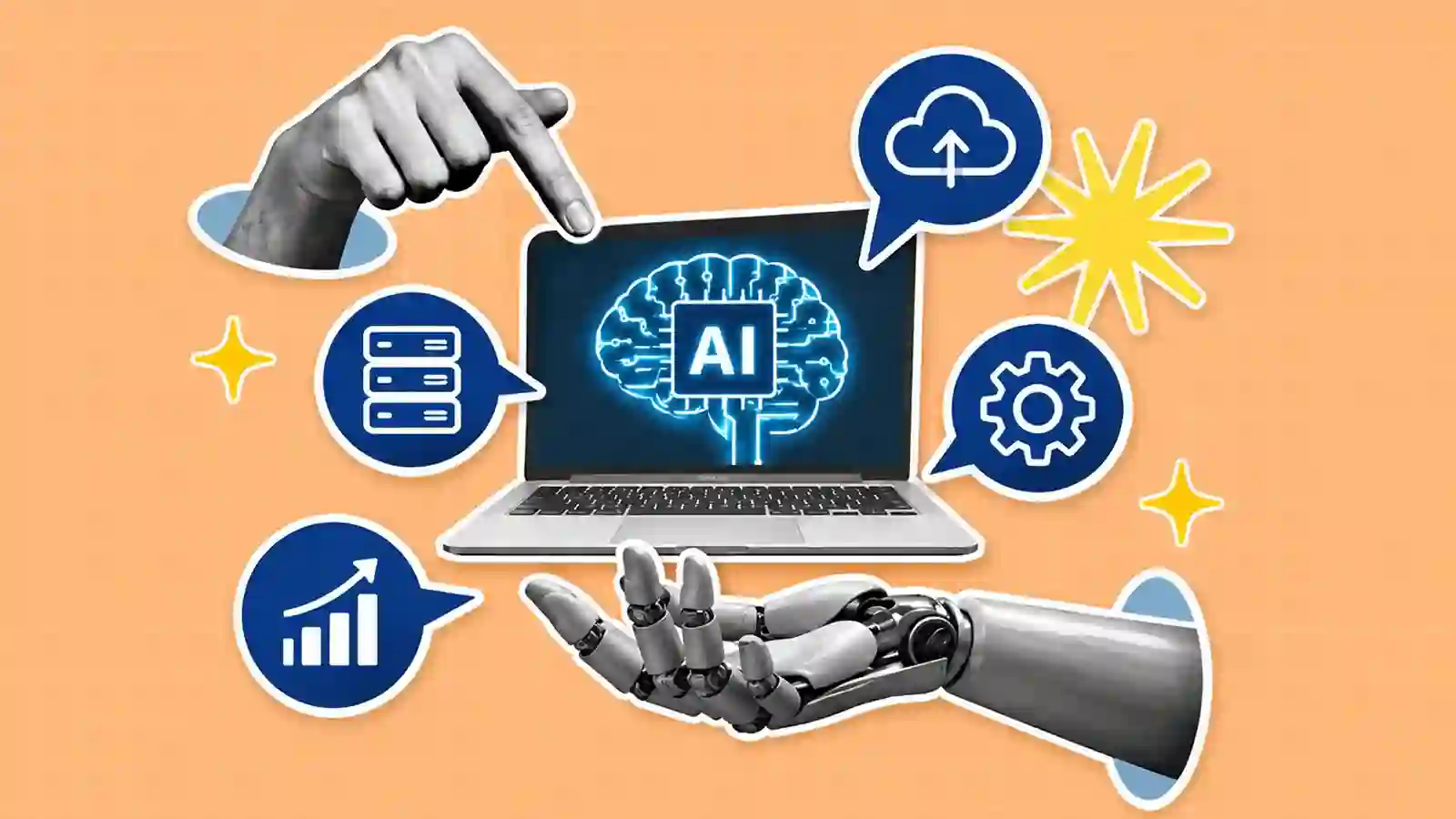
Artificial Intelligence in IT is a powerful concept shaping the future and redefining what lies ahead. It has gone beyond enhancing traditional computing methods and is now deeply integrated across multiple industries, driving significant transformation. As the world becomes increasingly digital and industries grow smarter, IT organizations must adapt to rapidly evolving technologies, rising process complexities, and the fast pace of innovation.
This transformation is pushing them to rethink traditional approaches and embrace AI-driven business strategies to stay competitive. While the shift brings immense opportunities, it also introduces new challenges, including evolving skill requirements and ethical considerations.
In this blog, we explore how AI is set to change the IT industry, the benefits it offers, and what the future holds in an increasingly intelligent digital landscape. Let’s get started.
Key Takeaways
- AI is transforming core IT functions by automating processes, improving efficiency, and reducing human error.
- Software development is becoming faster and smarter with AI-assisted coding, debugging, and testing tools.
- AIOps enables proactive IT management, helping organizations predict and prevent system failures instead of reacting to them.
- Cybersecurity is evolving with AI, allowing real-time threat detection and faster response to cyberattacks.
- Routine tasks are increasingly automated, freeing IT professionals to focus on strategic and creative work.
- Data management is becoming more intelligent, with AI enabling faster insights and better decision-making.
- Cloud computing is being optimized by AI, improving performance, scalability, and cost efficiency.
- Skill requirements in IT are shifting, with growing demand for AI, machine learning, and data science expertise.
- Customer experiences are improving through AI-driven personalization, chatbots, and virtual assistants.
- Ethical challenges must be addressed, including data privacy, bias, and transparency in AI systems.
- AI will continue to drive innovation, making the IT industry more agile, competitive, and future-ready.
Impact of AI in IT Industry
Let’s explore how artificial intelligence can change the IT world.
1. Revolutionizing Software Development
One of the most significant impacts of AI in IT is in software development. Traditionally, coding has been a manual, time-intensive process requiring deep expertise. Today, AI-powered tools can assist developers by generating code, identifying bugs, and even suggesting optimizations. These tools are making development faster, more efficient, and less prone to human error.
AI-driven code assistants can analyze vast repositories of existing code to provide real-time recommendations. This reduces development time and allows engineers to focus on higher-level problem-solving rather than repetitive tasks. In the future, we may even see fully autonomous systems capable of building applications with minimal human intervention.
2. Enhancing IT Operations (AIOps)
AI is transforming IT operations through a concept known as AIOps (Artificial Intelligence for IT Operations). By leveraging machine learning and data analytics, AIOps platforms can monitor systems, detect anomalies, and predict failures before they occur.
This predictive capability is a game-changer. Instead of reacting to issues after they arise, IT teams can proactively address potential problems, reducing downtime and improving system reliability. AI can also automate routine maintenance tasks, freeing up IT professionals to focus on strategic initiatives.
3. Strengthening Cybersecurity
Cybersecurity is another critical area where AI is making a substantial impact. As cyber threats become more sophisticated, traditional security measures are often insufficient. AI systems can analyze patterns, detect unusual behavior, and respond to threats in real time.
Machine learning models can identify potential vulnerabilities and flag suspicious activities much faster than human analysts. Additionally, AI can adapt to new types of attacks by learning from previous incidents, making it a powerful tool in the ongoing battle against cybercrime.
However, it is worth noting that cybercriminals are also using AI to develop more advanced attacks. This creates an ongoing arms race, where both defenders and attackers leverage AI capabilities.
4. Automating Routine Tasks
Automation is one of the most immediate and visible effects of AI in the IT industry. Routine tasks such as system monitoring, data entry, testing, and even customer support are increasingly being handled by AI systems.
This shift allows organizations to reduce operational costs and improve efficiency. For IT professionals, it means a transition away from repetitive tasks toward more complex and creative roles. While there are concerns about job displacement, many experts believe that AI will create new opportunities by enabling workers to focus on higher-value activities.
5. Transforming Data Management
Data is the backbone of modern IT systems, and AI is revolutionizing how data is managed and utilized. AI-powered tools can process massive volumes of data, extract insights, and make intelligent decisions in real time.
This capability is particularly valuable in areas such as data analytics, business intelligence, and cloud computing. Organizations can use AI to gain deeper insights into customer behavior, optimize operations, and make more informed decisions.
Moreover, AI can improve data quality by identifying inconsistencies and automating data cleansing processes. This ensures that organizations are working with accurate and reliable information.
6. Driving Innovation in Cloud Computing
Cloud computing and AI are closely intertwined. Major cloud providers are integrating AI services into their platforms, enabling businesses to access advanced capabilities without significant infrastructure investments.
AI can optimize cloud resource allocation, reduce costs, and improve performance. For example, AI algorithms can predict usage patterns and automatically scale resources to meet demand. This not only enhances efficiency but also ensures a better user experience.
As cloud adoption continues to grow, AI will play an increasingly important role in managing and optimizing cloud environments.
7. Changing Skill Requirements
The rise of AI is also reshaping the skills required in the IT industry. Traditional roles are evolving, and there is a growing demand for professionals with expertise in AI, machine learning, and data science.
IT professionals must adapt by acquiring new skills and embracing continuous learning. Understanding how to work alongside AI systems will become essential. Skills such as critical thinking, creativity, and problem-solving will be more valuable than ever, as these are areas where humans still outperform machines.
Educational institutions and organizations will need to update their training programs to prepare the workforce for this new reality.
8. Improving Customer Experience
AI is enabling IT companies to deliver better customer experiences. Chatbots, virtual assistants, and personalized recommendation systems are becoming standard features in many applications.
These AI-driven solutions can provide instant support, resolve issues quickly, and tailor services to individual users. This not only improves customer satisfaction but also reduces the workload on human support teams.
In the IT services sector, AI can help companies anticipate client needs and deliver more proactive and personalized solutions.
9. Ethical and Governance Challenges
While AI offers numerous benefits, it also raises important ethical and governance issues. Concerns about data privacy, algorithmic bias, and transparency must be addressed to ensure responsible use of AI.
Organizations must implement robust policies and frameworks to govern AI systems. This includes ensuring that AI decisions are explainable, fair, and aligned with ethical standards. IT professionals will play a crucial role in designing and maintaining these systems responsibly.
10. The Future of IT with AI
Looking ahead, the integration of AI into the IT industry will only deepen. We can expect to see more intelligent systems, greater automation, and new business models driven by AI capabilities.
The IT industry will become more agile, efficient, and innovative. Companies that embrace AI will gain a competitive advantage, while those that resist change may struggle to keep up.
Ultimately, AI is not just a tool, it is a transformative force that is redefining the very nature of the IT industry. By embracing this change and addressing its challenges, organizations can unlock new opportunities and drive growth in an increasingly digital world.