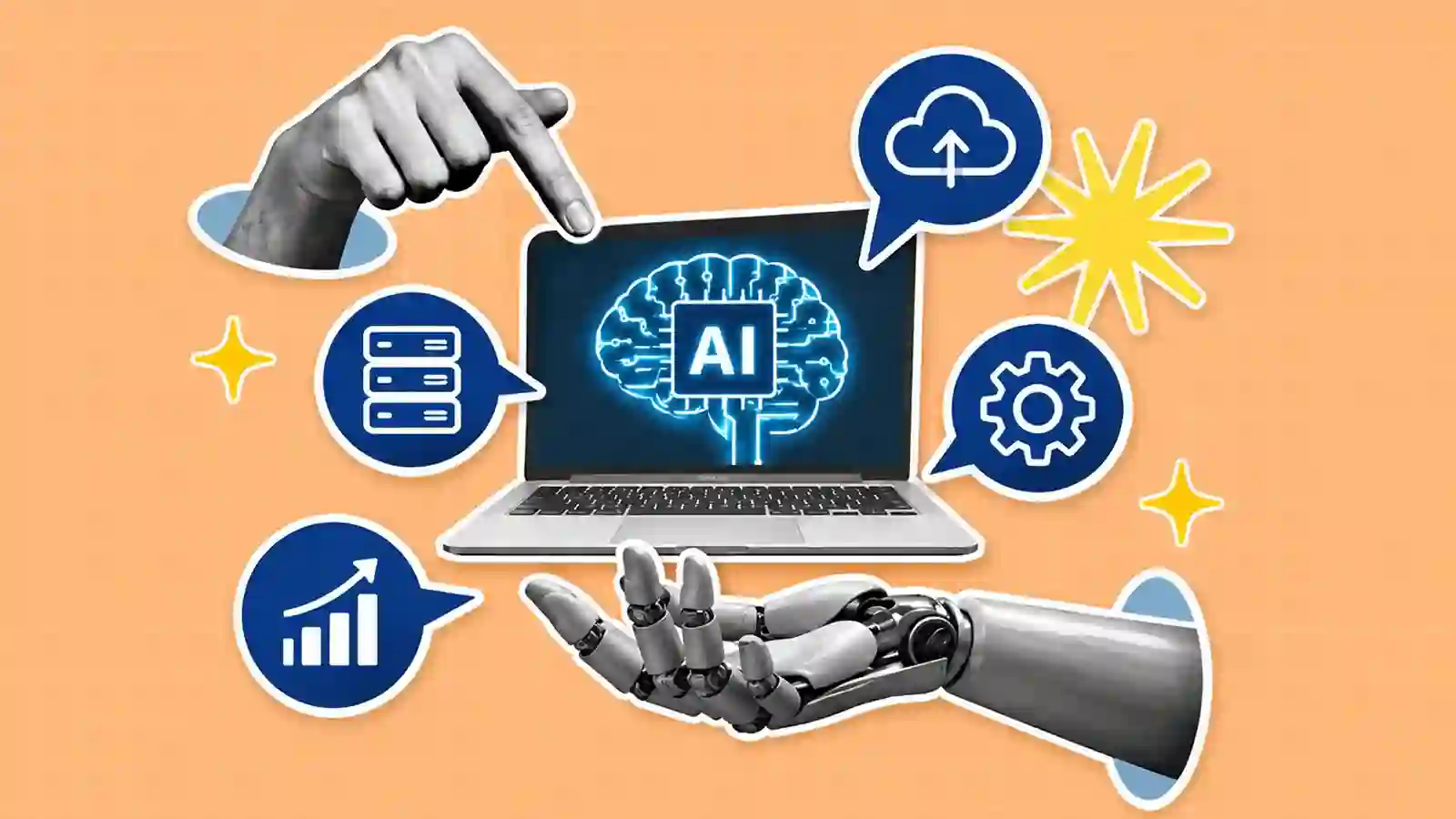

AI for Digital Marketing Agencies: Why It’s Essential for Survival in 2026
Summarize this blog post with:

2026 has already brought massive changes to the world of digital marketing.
Right?
The tools that were once deemed experimental are now at the forefront of marketing! Five years ago, many of these tools were either unseen or unavailable to marketers. Automation, predictive analytics, and the creation of content using Generative and Intelligent insights are integral to today’s marketing operations.
At Qtonix, we believe that by the end of this year, AI will no longer be optional for digital marketing agencies. It has become essential for survival. Agencies that fail to integrate AI into their workflows risk losing clients, falling behind competitors, and becoming irrelevant in a rapidly transforming industry.
In this blog, we explore why AI has become critical for digital marketing agencies and how it is reshaping the future of marketing.
The Rise of AI in Digital Marketing
Artificial intelligence has rapidly transitioned from a niche innovation to a fundamental component of marketing infrastructure. Today, more than 76% of marketing teams already use AI in core operations, a significant increase from just a few years ago.
Additionally, 94% of marketers plan to use AI for content creation processes by 2026, showing that AI-driven workflows are quickly becoming the industry standard.
AI tools are now used for:
- Content generation
- SEO optimization
- Ad campaign automation
- Customer behavior analysis
- Predictive marketing
- Chatbots and conversational marketing
As AI capabilities grow, the traditional manual marketing processes are rapidly disappearing.
For digital marketing agencies, this shift means one thing: adapt or be replaced.
AI Dramatically Increases Productivity
One of the biggest advantages AI offers agencies is productivity. Marketing teams that integrate AI can produce more work, faster, and at lower costs.
Studies show that 87% of marketers using AI for content creation report improved productivity, while 53% expect AI to significantly boost efficiency in their workflows.
AI tools can perform tasks that previously required entire teams, such as:
- Writing blog posts and ad copy
- Creating social media posts
- Designing marketing creatives
- Analyzing campaign data
- Generating performance reports
Instead of spending hours on repetitive tasks, marketers can focus on strategy, creativity, and decision-making.
Agencies that ignore AI will struggle to compete with AI-powered competitors who can deliver results faster and more efficiently.
AI Enables Hyper-Personalized Marketing
Personalization has become a core expectation for consumers. Generic marketing messages no longer work.
Artificial intelligence enables agencies to analyze large amounts of data and deliver highly personalized experiences to customers. Research shows that 84% of marketers now use AI for real-time personalization, allowing brands to tailor messages, offers, and content based on user behavior.
Additionally, 81% of consumers are more likely to purchase from brands that offer personalized experiences.
AI can analyze data such as:
- Browsing behavior
- Purchase history
- Search patterns
- Customer demographics
Using this data, AI can automatically generate personalized:
- Email campaigns
- Product recommendations
- Website experiences
- Advertising creatives
Agencies without AI simply cannot match this level of personalization.
AI Is Transforming Content Marketing
Content remains the backbone of digital marketing, but AI is changing how content is created and distributed.
By 2026, up to 75% of marketing content is expected to be generated with AI assistance. AI-powered tools can now generate:
- Blog posts
- Social media captions
- ad copy
- video scripts
- landing page content
Some studies even suggest that AI-generated advertising content can perform as well as or better than human-created ads in certain scenarios. This dramatically lowers the cost and time required to produce high-quality content.
Agencies that rely solely on traditional content production methods will struggle to keep up with AI-powered competitors producing content at scale.
AI Optimizes Advertising Campaigns
Digital advertising is becoming increasingly automated. Platforms like Google, Meta, and Amazon are integrating AI deeply into their advertising systems. AI can now:
- Automatically optimize ad targeting
- Adjust bidding strategies in real time
- Generate ad creatives
- Predict conversion probability
AI-driven ad optimization can deliver 30% higher ROI compared to manual campaign management, making it a powerful tool for agencies.
Additionally, AI can analyze millions of data points in seconds, allowing marketers to make smarter decisions faster.
For agencies managing multiple client campaigns, AI-powered automation is becoming essential.
AI Reduces Costs and Improves ROI
Marketing agencies operate in an increasingly competitive environment where clients expect measurable results and clear ROI.
AI helps agencies deliver better results while reducing operational costs.
Many organizations report that AI-powered marketing campaigns:
- Reduce wasted ad spend
- Improve targeting accuracy
- Increase conversion rates
- Deliver faster campaign optimization
Research shows that three-quarters of marketers report cost savings after implementing AI in their campaigns.
This means agencies using AI can provide better performance at lower costs, giving them a significant competitive advantage.
Tech Companies Are Disrupting Traditional Agencies
Another reason agencies must adopt AI is the growing competition from tech platforms themselves.
Major technology companies are building AI tools that allow businesses to create and run marketing campaigns without agencies.
These platforms can automatically generate ads, choose targeting, optimize budgets, and track performance. As a result, some brands are beginning to run marketing campaigns in-house using AI-powered tools.
If agencies want to remain relevant, they must shift their role from manual campaign execution to strategic marketing leadership.
In other words, agencies must become AI-powered strategists rather than service providers.
The Role of Agencies Is Evolving
AI will not eliminate digital marketing agencies, but it will transform them.
Future agencies will focus more on:
- Strategic marketing consulting
- Brand storytelling
- AI-driven data insights
- Marketing automation architecture
- Customer journey design
Routine tasks like reporting, content drafting, and ad optimization will increasingly be handled by AI.
Agencies that embrace this transformation will become more valuable to clients.
Those who resist change may struggle to survive.
The Agencies That Will Win in 2026
Successful digital marketing agencies in 2026 will have three key characteristics:
1. AI-First Operations
They integrate AI into every stage of marketing—from research and content creation to campaign optimization and analytics.
2. Strategic Expertise
Instead of selling tasks, they sell insights, strategy, and growth frameworks.
3. Human Creativity + AI Efficiency
The most powerful combination is not AI replacing marketers, but AI enhancing human creativity and decision-making.
Conclusion
Artificial intelligence is fundamentally reshaping the digital marketing industry. What was once a competitive advantage is quickly becoming a necessity.
AI enables agencies to:
- Scale content production
- Deliver personalized experiences
- Optimize campaigns in real time
- Reduce costs
- Improve ROI
With the majority of marketing teams already adopting AI tools and investment continuing to grow, the agencies that fail to embrace AI risk being left behind.
The future of digital marketing belongs to agencies that combine human creativity with AI-powered intelligence.
In 2026, survival in the digital marketing industry will not depend on whether agencies use AI—it will depend on how well they use it.
FAQs
AI improves campaign performance by analyzing user behavior, optimizing ad targeting, predicting customer intent, and adjusting campaigns in real time. This leads to better engagement, higher conversion rates, and more efficient ad spending.
Yes, small agencies can benefit significantly from AI. AI tools allow smaller teams to produce more content, automate repetitive tasks, analyze data faster, and compete with larger agencies without needing large teams or resources.
AI helps content marketing by generating blog ideas, writing drafts, optimizing headlines, suggesting keywords, and analyzing content performance. This allows agencies to create more content quickly while maintaining quality and relevance.
Many AI marketing tools are now affordable and available through subscription-based platforms. Even small agencies can start using AI with low-cost tools for content creation, analytics, and campaign automation.
Written by Adam Gibbs
Adam is a skilled SEO content expert with a proven track record of crafting high-quality, keyword-rich content that drives traffic, engages readers, and ranks on search engines. With 10+ years of experience in digital marketing and content strategy, Adam specializes in creating blog posts, website copy, and marketing materials tailored to both audience needs and SEO best practices.
Related Posts
- All Posts
- SEO

Mastercopy Table of Contents Book Intro Call Case Studies Share: Related Guides: Related Posts SEO Beyond Keywords: Why Schema Markups...

Mastercopy Table of Contents Book Intro Call Case Studies Share: Related Guides: Related Posts SEO Beyond Keywords: Why Schema Markups...

Mastercopy Table of Contents Book Intro Call Case Studies Share: Related Guides: Related Posts SEO Beyond Keywords: Why Schema Markups...

Mastercopy Table of Contents Book Intro Call Case Studies Share: Related Guides: Related Posts SEO Beyond Keywords: Why Schema Markups...
ChatGPT
Perplexity
Claude
Grok