

This WordPress theme is perfect for magazine, newsletter, professional and personal blog publishing

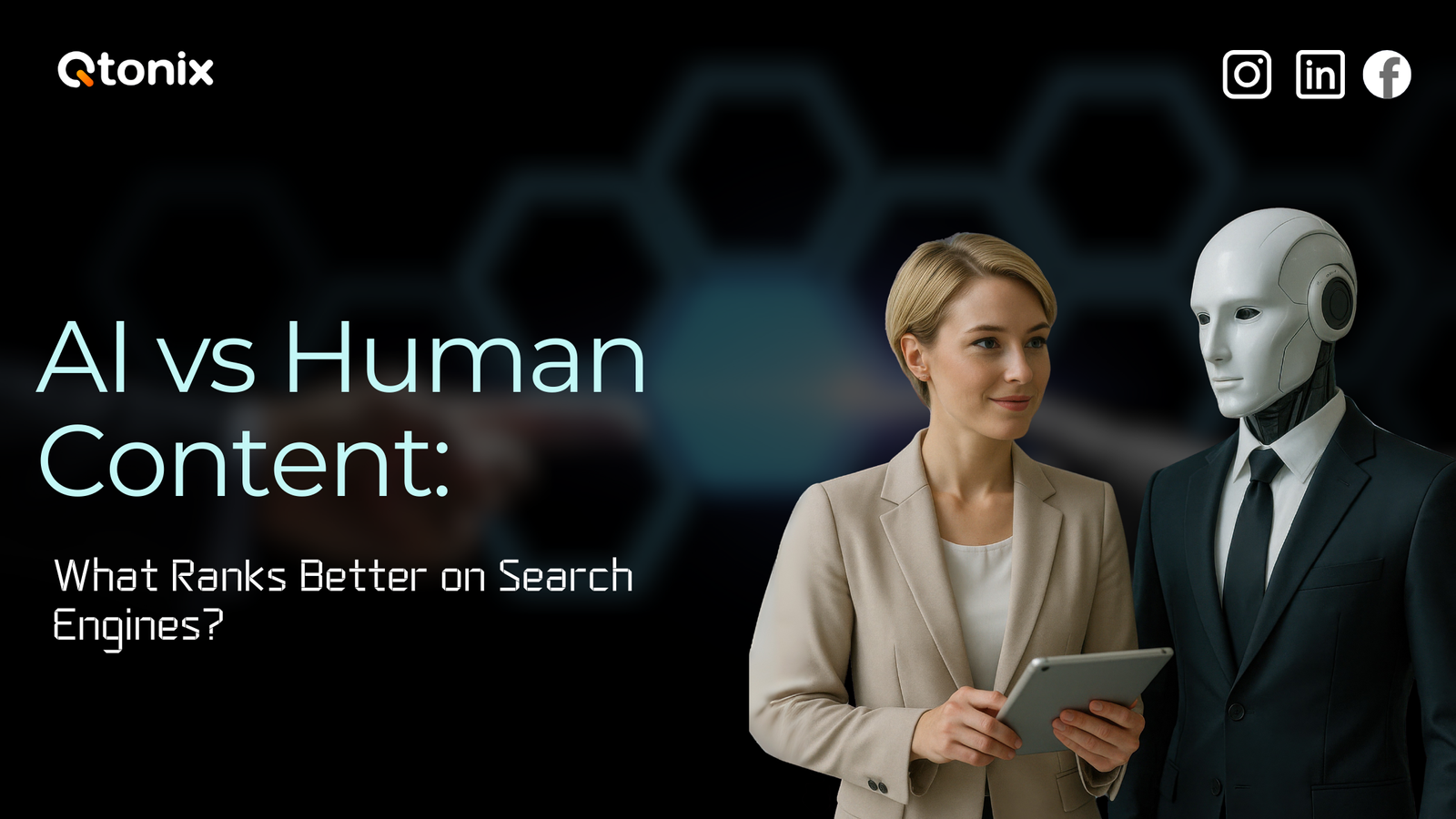
AI Content vs Human Content: What Ranks Better on Google in 2026?

Adam Gibbs
Adam Gibbs
AI-free content
📅 Updated: 9 January, 2026 / ⏱️ 3 min read
🎧 Listen Podcast
Ai Vs Human

The SEO industry is worth over $90 billion, employing thousands of writers who create blogs and articles to drive website traffic and improve search visibility. With the rapid rise of artificial intelligence and large language models, many writers and marketers now rely on AI tools to generate content faster than ever before.

There’s no doubt that AI can produce content at scale, but speed doesn’t always guarantee accuracy, depth, or trust. At Qtonix, our data shows that in the AI content vs human content debate, human-created content consistently outperforms when it comes to engagement, credibility, and long-term SEO value.

The term “AI SEO content” has become one of the most searched phrases since AI entered everyday content workflows. While AI offers undeniable advantages for writers and marketers, an important question remains: Does AI content actually work for search engine rankings, and if so, to what extent?

In this guide, we’ll break down a clear comparison of AI content vs human content, explore how search engines evaluate each, and show you how to leverage AI effectively, without making it the sole driver of your content strategy.

Table of Contents

Share:

Key Stats

  • Research says that the revenue of the content marketing industry is expected to reach $107 billion by the end of 2026.
  • 79% of CEOs and CTOs believe AI-driven content can increase work efficiencies.
  • A study shows that 46% of marketers want to expand their overall content marketing budget.
  • Content marketing is a core part of the strategy for 73% of B2B marketers and 70% of B2C marketers.
  • 74% of content marketers believe the value their content delivers is a very crucial factor. 

AI Content vs Human Content: Key Differences

The entire landscape of content creation has shifted dramatically in 2025 with the emergence of AI blog post generators. However, these tools are changing the role of writers. As technology continues to advance, the debate about the value of AI-generated rather than human-written content is growing. Here are the key differences between AI vs human writing:

Aspects

AI-Generated Content

Human-Written Content

Efficiency Extremely fast, can produce large volumes of content in minutes. Slower, requires research, drafting, and editing.
Cost Cost-effective once tools are in place. Higher costs due to writer fees, editing, and research time.
Originality May lack originality, sometimes repetitive or generic. More unique, creative, and nuanced.
Accuracy Relies on data training, may produce factual errors or outdated information. Can fact-check and ensure accuracy with reliable sources.
SEO Optimization Strong at keyword placement and formatting for search engines. Can strategically balance SEO with natural readability.
Tone & Style Consistent, but may feel robotic or impersonal. Adaptable, with emotional depth and brand-specific voice.
Engagement Quality May not fully connect with readers on an emotional level. Builds stronger trust, credibility, and reader connection.
Scalability Highly scalable for bulk content creation. Limited scalability; depends on human bandwidth.

Can AI Content Hurt Search Engine Rankings?

Google has already mentioned that AI-driven content will not impact the overall search rankings. As long as the content is relevant and informative, it will be accepted. Moreover, Google also prioritizes content quality rather than how you’re producing it. 

What’s the real outcome?

Our team did some vital research on this and found that 56% reported that AI has improved their page rankings, while 44% said it didn’t make any changes. 

Moreover, the impact of artificial intelligence on content performance is also mixed. 34% of respondents say AI improves performance, 19% report no effect, and 6% believe it actually harms performance.

AI’s effectiveness on search ranking and content performance depends on various factors like content type, the information you provide, and the quality of generative AI platforms. As audiences and algorithms continue to evolve, digital marketers who strike this balance will see the best results in rankings and engagement.

Conclusion

Who writes better blogs that get more traffic?

  • For SEO-driven, keyword-heavy blogs: AI takes the crown.
  • For storytelling, brand-building, and engagement: Humans win hands down.
  • For sustainable long-term growth: The hybrid model reigns supreme.

At the end of the day, traffic isn’t just about words; it’s about connection. AI can bring readers to your site, but only human creativity and authenticity can keep them coming back.

In the battle of AI vs Human blogs, the real winner is not one or the other; it’s those who use both wisely.

FAQs

Yes! AI-generated blog posts can rank on search engines if they are unique, helpful, and people-oriented. Search engines like Google will not ban AI content, but low-quality or spammy AI content will not do well in search.

No! While AI can automate repetitive content, it still struggles with creativity, personal experience, and emotional connection. Human writers will always be needed for high-value and engaging content.

It depends on the niche and goals.

  • AI blogs drive more search traffic for informational queries.
  • Human blogs drive more engagement traffic from loyal readers and social sharing.

Not precisely, but AI content is based on patterns from existing data. To avoid duplication issues, always edit, fact-check, and add originality before publishing AI-generated blogs.

Written by Adam Gibbs

Adam is a skilled SEO content expert with a proven track record of crafting high-quality, keyword-rich content that drives traffic, engages readers, and ranks on search engines. With 10+ years of experience in digital marketing and content strategy, Adam specializes in creating blog posts, website copy, and marketing materials tailored to both audience needs and SEO best practices.

Related Posts

  • All Posts
  • SEO
Load More

End of Content.

Scroll

Our site uses cookies. By using this site, you agree to the Privacy Policy and Terms of Use.

0%